
Remove “Instagram account hack” scam
The “Instagram account hack” scam refers to fraudulent websites that claim to offer tools capable of accessing or hacking other users’ Instagram accounts. These platforms are entirely deceptive and do not provide any real functionality. Instead, they are designed to exploit users by taking advantage of curiosity or unethical intent.
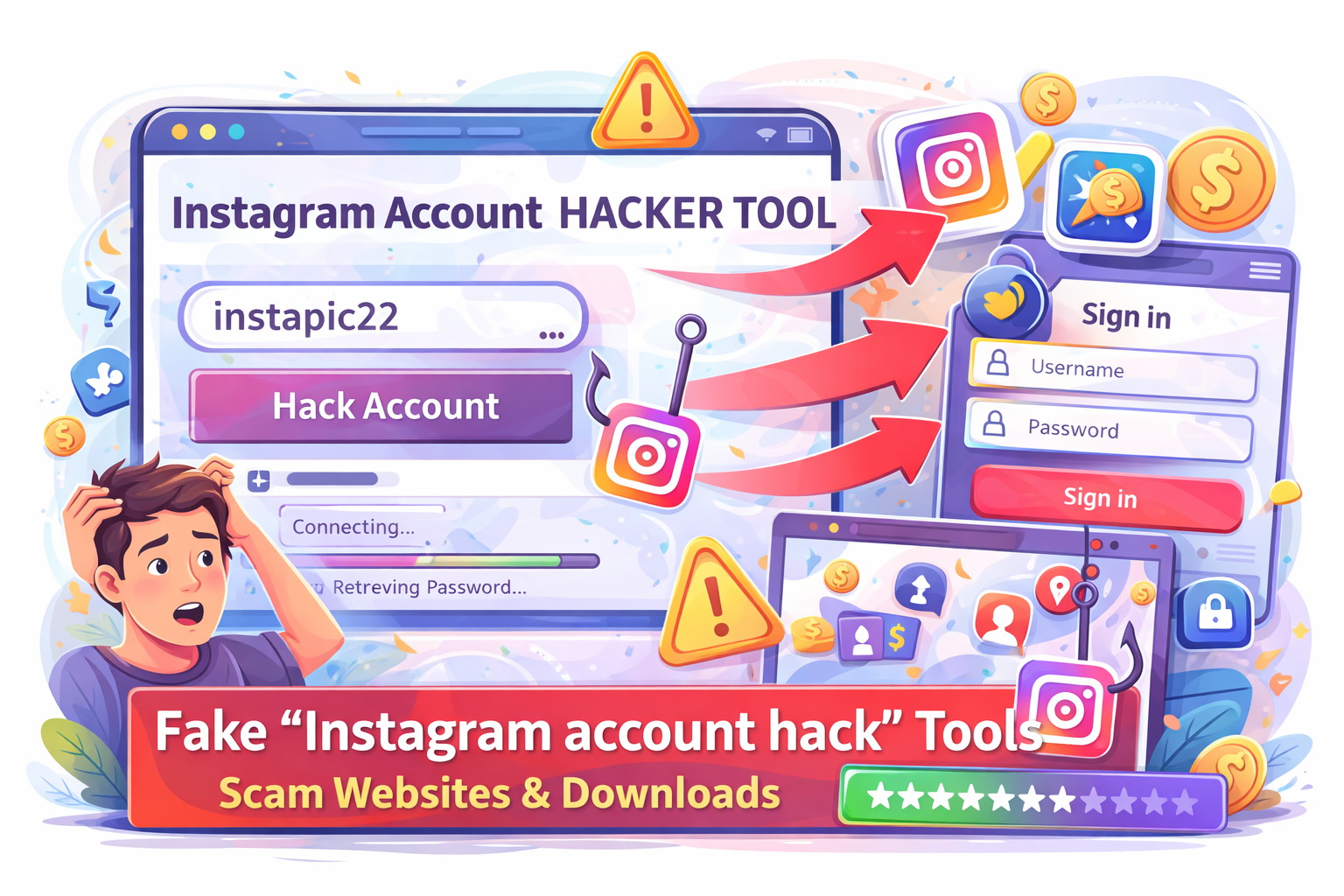
These sites are often presented as “Instagram hacker tools,” password recovery services, or account access generators. They usually ask users to enter the username of the account they want to access. After that, the page simulates a fake process, displaying messages such as “connecting to servers” or “retrieving data.” This staged activity is meant to create the illusion that a real hacking process is taking place.
Once the fake process is complete, users are told that the results are ready but cannot be viewed yet. To unlock them, the site requires additional actions. This is where the scam becomes harmful. Instead of providing any access, users are redirected to completing tasks that benefit the scammers. These tasks often include installing apps, signing up for services, or completing surveys. The scammers earn money through affiliate programs whenever users complete these actions.
Some versions of this scam attempt to collect sensitive information. Users may be asked to log into their own Instagram account under the pretense of verification. This leads to a fake login page designed to capture usernames and passwords. Once this information is obtained, attackers can take control of the victim’s account and use it for further malicious activities.
In addition to credential theft, these sites may expose users to intrusive advertisements, unwanted software, or potentially harmful downloads. Interacting with them can result in increased spam, reduced device performance, and further exposure to scams. While the promise is access to someone else’s account, the real outcome is often the compromise of the user’s own data and security.
It is important to understand that there are no legitimate tools that can hack Instagram accounts in the way these websites claim. Any platform offering such services is deceptive and should not be trusted.
How these scams spread and how to avoid them
These scams are commonly encountered through search engines, social media posts, and video platforms. Users searching for ways to access other accounts may come across content that appears to demonstrate working methods, but in reality, it simply directs them to fraudulent websites.
Another common method involves advertisements and redirect pages, especially on low-quality or unreliable websites. These ads often promote quick and easy ways to hack accounts, leading users to the same scam platforms. In some cases, repeated redirects may indicate that adware is already present on the device.
Avoiding this scam requires recognizing that its core promise is unrealistic. Websites claiming to provide access to private accounts are inherently untrustworthy and are designed to exploit users. Interacting with them by entering information, downloading software, or completing offers only increases the risk.
Users should always access their accounts through official websites or apps and avoid entering login credentials on unfamiliar pages. It is also important to avoid downloading software from unknown sources and to remain cautious when encountering suspicious content online.
Maintaining strong security practices, such as using unique passwords and enabling two-factor authentication, can help protect accounts from unauthorized access. Keeping devices and software updated, along with using reliable security tools, adds another layer of protection.
In summary, the “Instagram account hack” scam relies on deception and false promises. By understanding how it works and avoiding interaction with such websites, users can protect their accounts, personal information, and devices from unnecessary risk.
Site Disclaimer
WiperSoft.com is not sponsored, affiliated, linked to or owned by malware developers or distributors that are referred to in this article. The article does NOT endorse or promote malicious programs. The intention behind it is to present useful information that will help users to detect and eliminate malware from their computer by using WiperSoft and/or the manual removal guide.
The article should only be used for educational purposes. If you follow the instructions provided in the article, you agree to be bound by this disclaimer. We do not guarantee that the article will aid you in completely removing the malware from your PC. Malicious programs are constantly developing, which is why it is not always easy or possible to clean the computer by using only the manual removal guide.