
Remove aisearchapp.net redirect
The aisearchapp.net redirect is caused by a browser hijacker linked to an unwanted extension known as AI Search. This site is not a legitimate search engine, even though it may appear functional. Instead, it is used to force traffic through its domain and manipulate browser behavior.
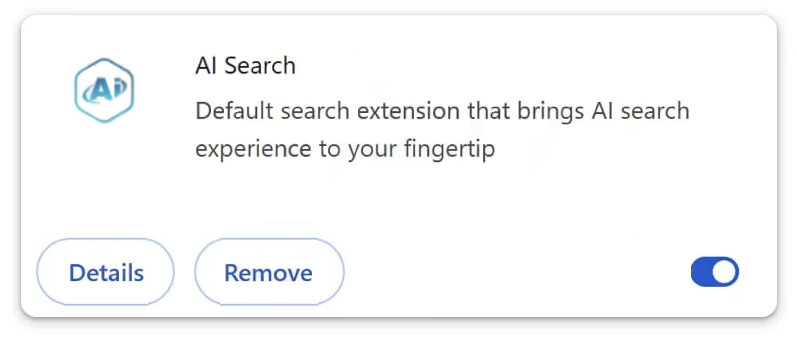
Once installed, the hijacker changes important browser settings such as the default search engine, homepage, and new tab page. Because of these modifications, users are automatically redirected to aisearchapp.net whenever they open a browser or perform a search. These changes are typically made without clear permission and can be difficult to reverse while the extension remains installed.
The site itself does not provide its own search results. Instead, it redirects queries to other engines like Yahoo after routing them through its own system. This allows the operators to profit from redirected traffic, ads, or sponsored content, rather than delivering genuine search functionality.
A major concern with aisearchapp.net is exposure to unreliable or potentially harmful websites. Redirect chains may lead to pages designed for phishing, scams, or the distribution of unwanted software. Some of these sites may attempt to steal sensitive data such as login credentials or financial information.
In addition to redirects, the associated extension may also collect browsing-related data, including visited websites and search queries. This information can be used for advertising purposes or shared with third parties, raising privacy concerns.
Users affected by this hijacker may notice slower browser performance, unexpected redirects, and reduced stability. While aisearchapp.net is not always classified as severe malware, it is still considered a potentially unwanted program (PUP) because it interferes with normal browsing and introduces security risks.
How it gets installed and how to avoid it
The aisearchapp.net redirect is typically introduced through deceptive distribution methods, rather than being installed intentionally.
One of the most common methods is software bundling. Free applications downloaded from unofficial or third-party websites may include additional components such as browser extensions. If users proceed with default installation options, these extras can be installed automatically without clear notice.
Another frequent source is misleading advertisements and pop-ups. Users may encounter prompts encouraging them to install extensions, enable notifications, or download tools that supposedly improve browsing. These prompts often lead to the installation of unwanted software responsible for redirects.
Untrusted platforms such as torrent sites, peer-to-peer networks, and unofficial app stores also contribute to the spread of browser hijackers. Software obtained from these sources is often repackaged with additional unwanted components.
In some cases, repeated redirects may indicate that a malicious extension or program is already installed on the device. Such software can continuously modify browser behavior without direct user interaction.
To avoid threats like aisearchapp.net, users should download software only from official or reputable sources and carefully review installation steps. Choosing “Custom” or “Advanced” installation settings allows users to detect and decline any additional components before they are installed.
It is also important to avoid clicking suspicious ads, pop-ups, or links, especially those that promote browser tools or updates. Keeping the system updated and using reliable security software can help detect and block unwanted applications before they affect the browser.
In summary, aisearchapp.net is a redirect linked to a browser hijacker that forces unwanted traffic, tracks activity, and exposes users to potential risks. By staying cautious during installations and avoiding unreliable sources, users can significantly reduce the chances of encountering this type of threat.
Remove aisearchapp.net redirect
The easiest way to remove aisearchapp.net redirect is to use an anti-virus program like WiperSoft and have it get rid of the browser hijacker. There should be no issues with changing a browser’s settings once the browser hijacker has been removed.
Site Disclaimer
WiperSoft.com is not sponsored, affiliated, linked to or owned by malware developers or distributors that are referred to in this article. The article does NOT endorse or promote malicious programs. The intention behind it is to present useful information that will help users to detect and eliminate malware from their computer by using WiperSoft and/or the manual removal guide.
The article should only be used for educational purposes. If you follow the instructions provided in the article, you agree to be bound by this disclaimer. We do not guarantee that the article will aid you in completely removing the malware from your PC. Malicious programs are constantly developing, which is why it is not always easy or possible to clean the computer by using only the manual removal guide.